

Relying on a single paycheck makes your finances vulnerable—to layoffs, medical surprises, or even just a bad quarter at work. Income diversification is the antidote: adding a small, reliable second stream that cushions shocks and accelerates goals. This guide shows you how to pick the right side hustle, launch in 90 days, and manage cash flow so your main life doesn’t fall apart.
General information only—not financial, legal, or tax advice. Check your employer policies and local rules before starting any side business.
Why Diversification Works (The Stability Flywheel)

- One check, many risks. A single employer means concentrated risk.
- Two+ streams, smoother cash flow. When one income dips, the other keeps bills paid.
- Optionality. Extra cash helps you build an emergency fund, pay down debt faster, and negotiate better at work.
- Skill compounding. The right side hustle grows your market value—even if you never “go full-time.”
Step 1 — Find Your Fit (Skills × Time × Capital × Constraints)

Before you chase ideas, define your constraints:
- Skills/advantages: What can you do well today? (e.g., writing, design, data, sales, language)
- Time window: Realistic weekly hours (e.g., 6–10 hrs) and days available
- Capital: Cash you can invest upfront (e.g., $0–$300)
- Constraints: Employer policy, non-compete, safety, insurance, location, transportation, childcare
Fast Filter Question: If you stopped after 30 days, would the skill you built still be valuable? If yes, proceed.
Step 2 — Side Hustle Idea Matrix (Score What Fits You)
Score each idea 1–5 on the criteria below (5 = best). Pick the top 1–2 totals.
| Idea | Earnings Potential | Time to First $ | Upfront Cost | Flexibility | Scalability | Platform Risk | Enjoyment | Total |
|---|---|---|---|---|---|---|---|---|
| Freelance Writing/Design | 4 | 3 | 1 | 4 | 3 | 2 | 4 | 21 |
| Tutoring (Language/Math) | 4 | 3 | 1 | 4 | 3 | 2 | 4 | 21 |
| Virtual Assistant (Remote) | 4 | 3 | 1 | 5 | 3 | 2 | 4 | 22 |
| Reselling/Thrifting | 3 | 3 | 2 | 4 | 3 | 3 | 3 | 21 |
| Rideshare/Delivery | 3 | 4 | 2 | 5 | 2 | 4 | 3 | 23 |
| Niche Content + Affiliate | 3 | 2 | 1 | 4 | 5 | 3 | 4 | 22 |
Platform risk = how dependent it is on one app/algorithm (lower is better).
Pick one services idea (fast cash flow) or one content/e-comm idea (slower start, higher long-term upside). Avoid starting two at once unless you have >10 hrs/week consistently.
Step 3 — Know Your Numbers (Break-Even & Effective Hourly Rate)
Break-Even:
Revenue – Direct Costs – Platform Fees – Tools – Tax Reserve = Net
- Set aside a tax reserve from Day 1 (e.g., 20–30% of profit depending on your situation).
- Track every cost: mileage, packaging, software, marketplace fees.
Effective Hourly Rate (EHR) Calculation:
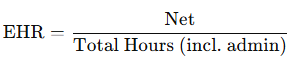
Include everything: doing the work, messaging, invoicing, marketing, travel, learning.
Mini Example (Freelance):
$600 revenue – $30 software – $30 fees – $120 tax reserve = $420 net.
10 hrs total → $42/hr EHR. If your goal is $30/hr+, this passes. If not, raise rates, niche down, or streamline.
Step 4 — A 90-Day Launch Plan (Week-by-Week)
Week 0–1: Foundation
- Choose one idea from your matrix.
- Check employer policy, non-compete, local permits.
- Create a simple brand asset set (name, one-line pitch, 3 bullets of value).
- Set up separate bank account (or sub-account) + spreadsheet/app for tracking.
Week 2: Proof of Work
- Build 3 portfolio samples (or product mockups).
- Write a value-first outreach template (who you help, outcome, 1 clear next step).
- Publish a basic landing page or profile (clear offer, price/CTA, testimonials placeholder).
Week 3–4: First Dollars
- Send 20 targeted outreaches (or list 10 items / post 3 content pieces).
- Offer a small, fixed-scope package with a 7–10 day turnaround.
- Ask for one sentence of feedback + permission to use results as a testimonial.
Month 2: Productize & Systemize
- Turn repeat tasks into packages (good/better/best).
- Create checklists and templates to reduce admin time.
- Tune pricing: aim for your target EHR after all costs.
Month 3: Stabilize & Grow
- Add one growth channel (referrals, SEO blog, local groups, marketplaces).
- Batch your work: e.g., client work Tue/Thu, marketing Wed, admin Fri 30 min.
- Re-check your matrix and EHR; keep the winners, cut the rest.
Step 5 — Manage Cash Flow for Variable Income
- Buckets method: Every payout splits automatically into Pay Yourself (profit), Operating Costs, Tax Reserve, Owner Pay.
- Mini emergency fund: Keep at least one month of side-hustle expenses; two is better.
- Invoice rules (services): 50% upfront for >$500 projects; net-7/14 on delivery; late fees clearly stated.
- Subscriptions audit: Quarterly review every tool—cancel or downgrade what you don’t need.
Step 6 — Protect Your Time and Energy (Burnout Guardrails)
- Hard boundary: Max 10 hours/week unless EHR > your main job’s rate or you’re in a seasonal sprint.
- Theme days: Group similar tasks to avoid context switching.
- Red/Green calendar: Red = family/rest, non-negotiable; Green = side hustle blocks.
- Quality bar: If output quality drops below your baseline, pause marketing and fix process first.
Step 7 — Risk, Compliance & Ethics (Keep It Clean)
Employer & contracts: Check moonlighting rules; avoid conflicts of interest.
Client agreements: Use a simple contract—scope, timeline, price, revisions, IP, confidentiality.
Privacy & data: Store client info securely; only collect what you need.
Insurance: Consider liability coverage if you visit client sites or handle physical goods.
Taxes & entity: Track income/expenses from day one. Whether to form an LLC depends on your risk and locale—don’t over-engineer on day one.
When to Scale, Pivot, or Stop
Scale if:
- EHR ≥ target for 2+ months
- Demand > capacity with waitlist
- Clear upsell/cross-sell exists (e.g., retainer, maintenance package)
Pivot if:
- EHR consistently below goal
- High platform dependency or policy risk
- Work drains energy even after process fixes
Stop if:
- It harms your primary job, health, or relationships
- Net cash flow is negative for 3 straight months with no learning curve left
Frequently Asked Questions
How much should I set aside for taxes?
A simple starting heuristic is reserving a portion of profit each payout (e.g., 20–30% depending on your situation). Rules vary by location—consult a tax professional.
Do I need a website to start?
No. A simple portfolio link or marketplace profile plus a clean outreach message is enough for your first clients. Build a site when you have proof and testimonials.
What if I only have 5 hours per week?
Pick a service with short cycles (e.g., editing, VA, quick design tasks) or a product that ships weekly (one listing batch, one content post). Tight scope beats big promises.
How do I avoid scope creep?
Fixed-price packages with explicit deliverables, one revision round, and a clear change-order policy. Invite upgrades; don’t absorb them.
The Bottom Line
Income diversification isn’t about working nonstop—it’s about creating one durable, cash-positive stream that fits your life. Start with a fit-checked idea, price for profit using EHR, and follow the 90-day plan. Protect your time, document your process, and let the right things scale.



Comments are closed.